Some Problems Have to Be Felt: The Limits of Vicarious Learning
Our preregistered field experiment at a two-day hackathon revealed that teams who physically simulated stroke symptoms produced more innovative solutions than teams who received the same knowledge through videos and conversations with therapists.
By Chan Park and Vivek Chaudhary
Summer 2026

Key takeaway: Vicarious learning is an efficient substitute for experience when the knowledge you need is about the solution, which is concrete and observable. It falls short when the knowledge you need is about the problem, which is rooted in physical and sensory experience. When the hard part is understanding what users actually face, put your team through the experience instead of describing it to them.
Organizational learning research has long treated vicarious learning as a practical substitute for experiential learning. Learning by doing is slow, costly, and constrained by what happens to be available locally. Learning by watching others is cheap, fast, and can draw on a much wider pool of examples. The usual conclusion is that organizations should lean on observation and imitation wherever they can. This project identifies a boundary condition to that logic: the problem space.
The distinction that matters is between solution knowledge and problem knowledge. Solution knowledge is concrete and observable. You can watch how something is built, copy a design, or reverse-engineer a working product, and the knowledge transfers reasonably well. Problem knowledge is different. It is grounded in physical and sensory experience, in what a situation actually feels like from the inside. That kind of knowledge resists observation. You can be told about it accurately and still not have it. The prediction follows directly: when learning targets the problem rather than the solution, experiential learning should outperform vicarious learning in enabling innovative solutions.
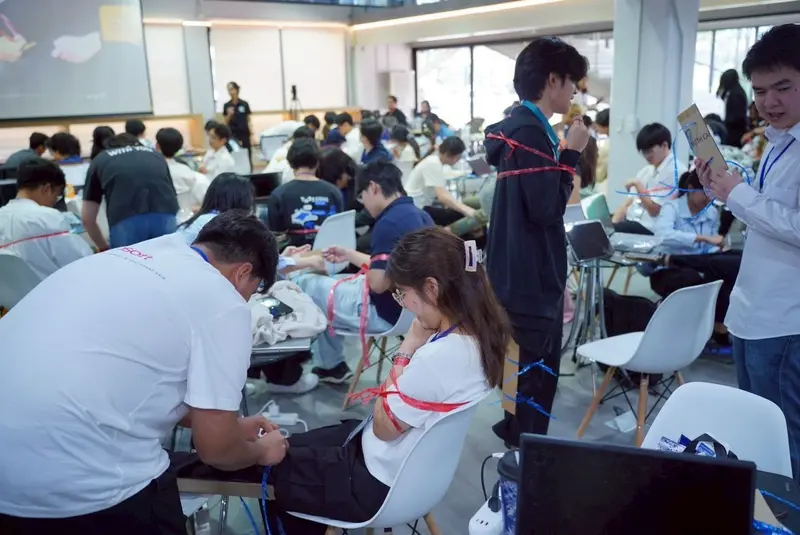
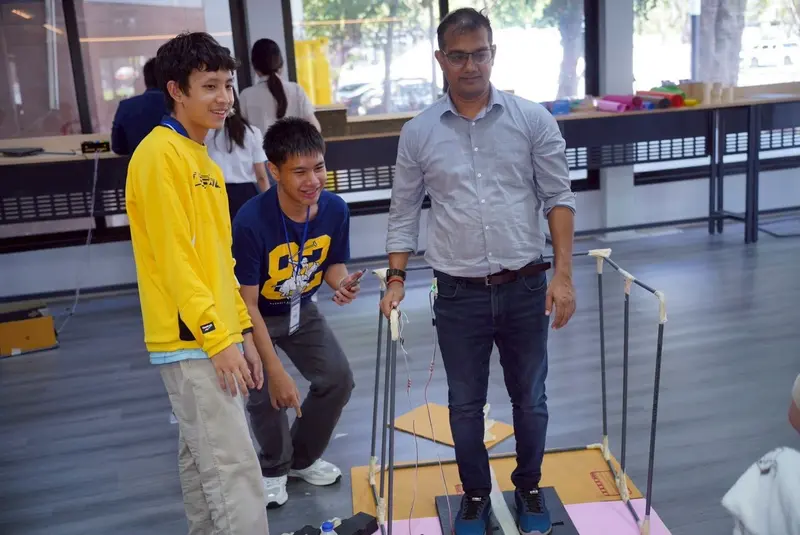
To test this, the project ran a preregistered randomized field experiment with teams at a two-day hackathon focused on stroke rehabilitation, where teams generated and implemented hardware–software solutions. Treated teams performed physical activities that simulated stroke symptoms, experiencing the impairments directly in their own bodies. Control teams received equivalent knowledge vicariously, through video and through interaction with therapists. This is worth emphasizing: the control condition was not information-poor. Teams in both conditions had access to the same underlying knowledge. What differed was the channel through which they got it.
The treatment increased innovation. Teams that had physically experienced the symptoms produced more innovative solutions than teams that had learned about them from experts and video.
Post hoc analysis points to a more nuanced mechanism than a simple boost to creativity. The effect operated through the value of the solutions rather than their novelty. Teams that had experienced the problem developed a deeper and more accurate understanding of it, and that understanding showed up in solutions that were genuinely more useful. Novelty, by contrast, tracked technical expertise: how unusual a solution was depended largely on what a team was technically capable of building. Experiencing the problem did not make teams more inventive in the abstract. It made their inventiveness land on the things that mattered.
For practice, this reframes a common assumption about empathy work. Simulation exercises, user shadowing, and immersive site visits are often treated as motivational or as a way to build commitment to a project. This project suggests they do something more specific: they transfer a kind of problem knowledge that briefings, videos, and expert interviews cannot fully deliver, however well those are executed. Expert testimony remains valuable, but it is not a substitute for the experience itself.
The practical guidance is therefore about allocation. If a team's constraint is technical, invest in expertise and in exposure to existing solutions, where vicarious learning is efficient and effective. If a team's constraint is understanding the problem, spend the time and the cost on direct experience. Knowing which of those two constraints you face is itself part of the work.
© 2026 Build2Gether. All rights reserved.