When Sharing Experiences Fails to Drive Innovation
Our field experiment in a global crowdsourcing contest found that sharing personal experiences did not help able-bodied innovators develop more innovative solutions for individuals with disabilities than sharing explicit, codified information
By Cyrille Grumbach, Chan Park, and Georg von Krogh
July 15 to December 1, 2023
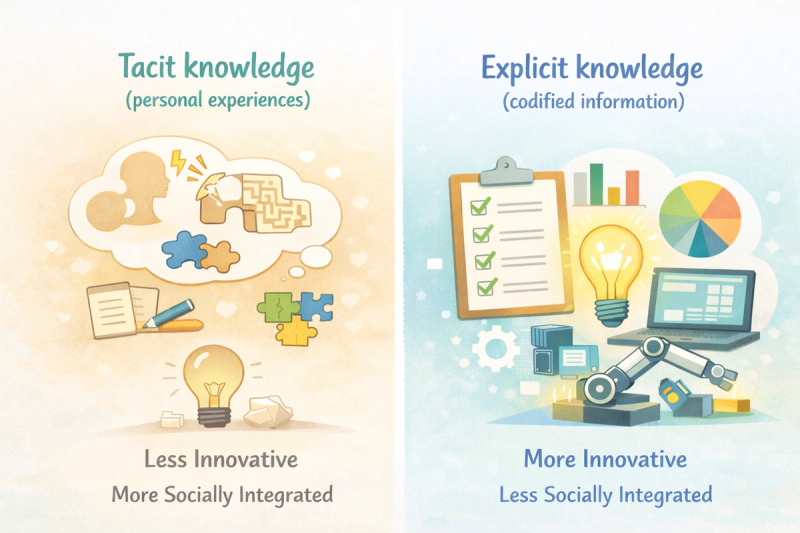
Key Takeaway: Tacit knowledge is not always better for innovation. In this project, innovators produced more innovative solutions when users shared explicit, codified information than when they shared tacit knowledge through personal experiences, although experience sharing helped users feel more socially integrated.
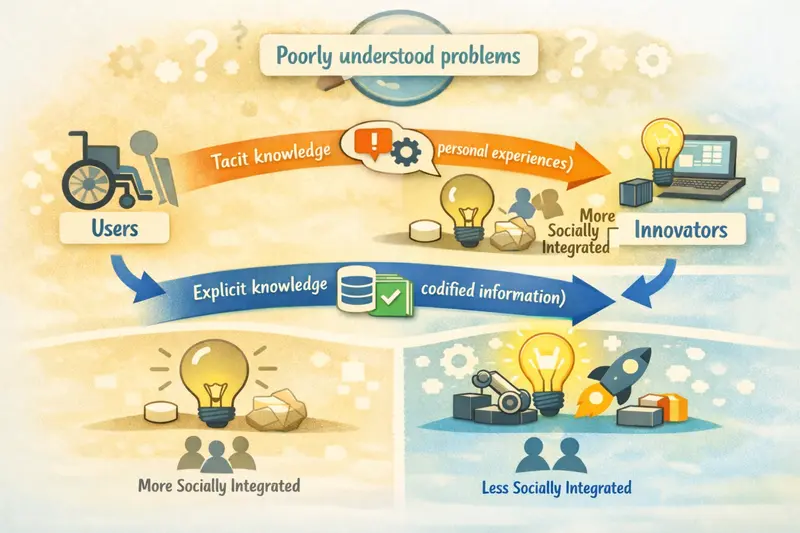
This project examines a simple yet important question: when users face problems that are still poorly understood, what is the best way to help innovators solve them? The study focused on a global crowdsourcing contest on innovation for individuals with disabilities. In this setting, the users had firsthand knowledge of their problems, while the able-bodied innovators did not.
The comparison was direct. In one condition, users shared explicit, codified information about their problems. In the other, they shared tacit knowledge through their personal experiences so innovators could learn from them. The expectation was that personal experiences would transfer more of the users’ tacit knowledge and lead to stronger innovation. But that is not what happened. Solutions developed when users shared explicit, codified information were rated by other users facing similar problems as more innovative than solutions developed when users shared personal experiences.
Why? The study suggests that experience sharing may not work well when the knowledge is somatic, grounded in embodied experience, such as how users physically feel their problems. Rich personal experiences gave innovators a lot of information, but often too much. Many struggled to identify the central problem and got pulled toward secondary details. By contrast, innovators who received explicit, codified information were better able to focus on relevant problems and develop stronger solutions.
For practice, this matters for anyone organizing open innovation around social issues. If the goal is stronger innovation, simply asking users to share personal experiences may not be enough. If the goal is social integration, however, experience sharing still has value, because users feel more socially integrated in that condition. The project shows that organizers may need to design their processes differently depending on whether they want to maximize innovation or strengthen social integration between users and innovators.
All solutions developed through the contest are open-source and have been downloaded more than 250,000 times around the world, creating significant social impact for individuals with disabilities!
More about the contest can be found on Hackster.io: https://www.hackster.io/contests/buildtogether
Our contest has also been featured on ABC News, Forbes, and Make: magazine!
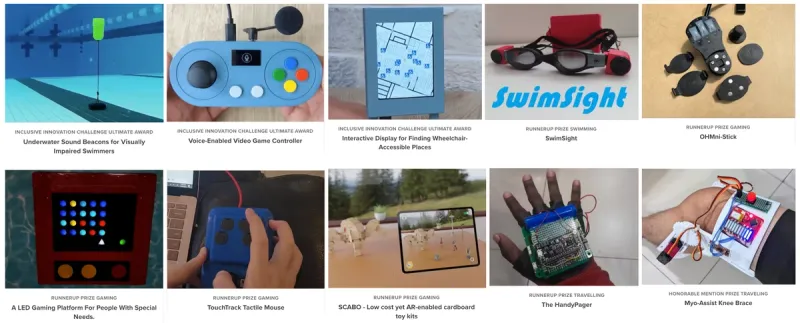
Examples of solutions developed in our innovation contest:
© 2026 Build2Gether. All rights reserved.